Every week, more than four Texas children die because of child abuse and neglect.
The Texas Department of Family and Protective Services (DFPS) recently released their Child Maltreatment Fatalities and Near Fatalities Annual Report for Fiscal Year 2019. The report collects and provides context for the number of child deaths that occurred throughout the state, a troubling reminder that we have much more work to do in preventing child abuse and neglect. This year, there were a reported 235 confirmed abuse or neglect-related child fatalities in Texas, the highest number of fatalities we have seen in the last decade since it peaked in 2009 at 280 deaths, and on the rise from a low of 151 in 2014. Texas’s number of child fatalities is well above the national average with a 2.70 per capita rate for child abuse and neglect fatalities over the national average of 2.39.
Overall Takeaways:
The top causes of child abuse and neglect related fatalities included:
Neglectful Supervision (total of 141 cases)
Drowning (48 cases)
Unsafe Sleep (30 cases)
Vehicle Related (19 cases)
Physical Abuse (total of 94 cases)
Blunt Force Trauma (56 cases)
In 91% of the child fatalities, there was no open Child Protective Services (CPS) investigation or case at the time of the child’s death.
There was no prior CPS history with either the child or the perpetrator in approximately 55% of the child abuse or neglect fatalities. This percentage remained steady from Fiscal Year 2018.
These percentages still reveal that several families had previous or active involvement with CPS. Therefore, families who experienced a child death were not receiving the support they needed or something about the services these families received did not work.
Victim Characteristics:
72% of child deaths were between the ages of 0 and 3
There was an increase involving children age 4 through 6.
56% of the child fatalities were due to neglectful supervision, which is specified as physical/medical neglect, and unsafe sleep practices accompanied by substance abuse.
This concerning information illustrates the importance of prevention and early intervention efforts like Project HOPES and home visiting programs that support families in the early years when brain development is at its peak and families may not be connected to other resources that could help them create safe and nurturing environments for their children before a crisis occurs. As the Prevent Child Abuse Chapter for Texas, TexProtects is on the front lines to increase access to evidence-based prevention programs so that children can be safe, and their families can get the support they need.
Another concern about what the data shows is that we are still seeing some populations disproportionately represented in child deaths across the state:
Hispanic children made up the largest percentage of deaths (35%).
African American children were the highest rate per capita (7.85 vs 3.14).
29% of the fatalities were children with special medical needs.
Approximately 57% of all child deaths were male (133).
It is worth noting that Texas defunded the Office of Minority Health Statistics and Engagement in 2018, leaving one person at DFPS leading the efforts to address racial inequities. In the report, DFPS mentions their cross-sectional work with other agencies and stakeholders, but it is worth considering how that work can be more targeted and effective specifically as it relates to equity issues.
Underlying Issues Faced by the Perpetrators of Abuse/Neglect:
48% of the child fatalities involved substance use of a caregiver.
A parent/caregiver in the child’s household reported active mental health concerns in 32% of the child fatalities.
This is where we can leverage federal dollars for prevention services eligible through the Family First Prevention Services Act (FFPSA) for families. These federal dollars intend to address the key drivers of child abuse and neglect: substance use, mental health, and lack of parenting skills. Key policymakers and state agencies are making decisions now about how to implement FFPSA in Texas. TexProtects believes that making high quality, evidence-based prevention services available to families that address these issues will provide parents and caregivers with the tools they need to meet their children’s needs and safely keep their families together.
The Child Maltreatment Fatalities Report makes clear to advocates and policymakers alike why it is so necessary that Texas invests in child abuse and neglect prevention efforts. Every week, more than four children die because of child abuse and neglect. At TexProtects, we believe these deaths can be prevented. Join us as we work to ensure that they are.
A study released last week shows that 63% of pediatricians reported utilizing standardized developmental screening tools in 2016. That’s up 21% since 2002, but well short of the American Academy of Pediatrics recommendation that ALL children be screened at 9, 18, and 30 months.
TexProtects’ Takeaway: As part of our Prenatal to Three Policy Agenda, TexProtects will be working throughout the interim and into next session on ways to increase the rates and quality of developmental screenings, as well as ensuring that appropriate referrals are provided in response to those screenings. It’s about getting families to the right community resources at the right time!
A randomized control trial of 742 pregnant, low-income women with no previous live births found that children whose mothers had participated in nurse home visiting demonstrated better receptive language, math achievement, and a number of other secondary cognitive-related outcomes.
An 18-year follow-up of 618 out of 742 low-income, primarily African-American mothers with no previous live births enrolled in an randomized clinical trial of a prenatal and infancy nurse home visiting program concluded that nurse-visited women incurred $17,310 less in public benefit costs compared with program costs of $12,578.
TexProtects’ Takeaway: Since its inception, TexProtects has advocated for the expansion of evidence-based home visiting programs like Nurse-Family Partnership: they have an amazing return on investment and positive outcomes across multiple domains and two generations. Despite significant progress, less than 4% of families who could benefit from these programs have access to them. Expanding home visiting programs through the Prevention and Intervention Division, the Family First Prevention Services Act, and other funders is a critical part of our Prenatal to Three policy agenda.
Child Trends fielded the 2019 Survey of Child Welfare Agency Policies and Practices for Infants and Toddlers in–or who are candidates for–Foster Care to understand what policies and services are already in place for infants and toddlers involved in and at risk of entering foster care, as well as to understand where the child welfare field can leverage the opportunities provided by the Family First Prevention Services Act (FFPSA).
TexProtects’ Takeaway: With FFPSA, states have a new opportunity to use federal funds to support the children and families who are at risk of becoming involved with the foster care system. Texas will likely need to increase its capacity to provide a robust array of services for infants and toddlers who are candidates for foster care, as well as their families. FFPSA is included in interim charges to multiple committees that will hold hearings in the coming months to monitor the Department of Family and Protective Service’s (DFPS) planning and implementation. Stay tuned for ways you can participate and speak up for Texas children.
Child Trends’ Lauren Supplee recently appeared on the Freakonomics podcast to discuss evidence-based policy and implementation science, the study of what factors make it possible to scale up research-tested programs to serve larger populations in different communities.
TexProtects’ Takeaway: Evidence-based policy ensures that children and families benefit from proven programs. However, implementation matters! Investments in continued evaluation, adaptations for unique populations, and model fidelity are critical components in taking what works in one place to a larger scale. Thankfully, innovators at Child Trends as well as the Child and Family Research Partnership (CFRP) at the University of Texas are leading the way in designing solutions for these challenges.
New America makes eight recommendations to further policy actions that will help “America’s children become lifelong learners who are able to think critically and inventively, manage their emotions and impulses, and make smart decisions.”
TexProtects’ Takeaway: There is much that can be done to support the healthy development of a child’s brain in the early years, both inside and outside the home. TexProtects appreciates the recommendations to support two-generation programs (like home visiting) and ensure that they are integrated with other early childhood systems, as well as the recommendation to identify stable funding sources for early education and care so that parents can plan ahead, knowing they will have access to high quality and affordable care while they are at work.
“Unsurprisingly, it is mothers’ employment that suffers most when families are unable to find a child care program that suits their needs. The child care crisis not only affects families’ bottom lines; it also costs the economy $57 billion in annual lost revenue, wages, and productivity.”
TexProtects’ Takeaway: Texas policymakers must do more in the upcoming legislative session to ensure low-income families are able to receive child care assistance, which is critical for the parents’ ability to support their families. High-quality child care is also critical for children’s safety and brain development. 16,379 children on wait lists for child care assistance (as of February 2019) is too many.
TexProtects is pleased to launch our latest monthly feature, Frontline for Children. In it, we will share the newest and most noteworthy child protection research and resources to keep you in the know and inform your work. Our new partnership with Child Trends–the nation’s leading nonprofit research organization focused exclusively on improving the lives and prospects of children, youth, and their families–has expanded our ability to ensure that we are able to keep you connected to innovations and data that will inform policy and program to ensure that every child is safe, nurtured, and resilient.
“’Ideally, pediatricians work closely with therapists and psychiatrists when treating children who have been maltreated, but we know this is not always possible,’ Dr. Keeshin said. ‘This report offers pediatricians some tools to help children and families address mental health problems that stem from maltreatment.”
TexProtects’ Takeaway: To ensure the most effective interventions for healing and to minimize the use of psychotropic medications, medical, social, and trauma histories should be integrated when working with children who have experienced maltreatment.
Features an interactive map of infant health outcomes by race and ethnicity, across states. In Texas, the state average infant mortality rate is 5.8 per 1000; however, for African American/black infants the rate is 9.8 per 1000. Similarly, 8.4% of Texas infants are born low birth weight; however, that rate jumps to 12.4% for African American/black infants.
TexProtects’ Takeaway: Infant health outcomes are closely tied to a mother’s health during pregnancy. Texas must do more to ensure equitable access to maternal care and home visiting programs to ensure healthy beginnings for our children, particularly in our rural communities where there are the greatest disparities.
Child Trends analyzed data from the 2016-2017 National Survey of Children’s Health (NSCH), which asks parents or guardians to report whether their child has experienced any of nine out of the 10 ACEs. We found that the prevalence of ACEs is higher among children with special health care needs than among their peers.
TexProtects’ Takeaway: Trauma-informed practices should be incorporated into programs and services for these children and their caregivers to mitigate the long term-impacts associated with adverse childhood experiences. Children with SHCN are three to four times more likely to experience abuse and neglect which make up five of the ACEs.
“The U.S. is already pouring billions of dollars into the current system through government expenditures and parental contributions. And yet the current system is failing parents by stretching family budgets and keeping millions out of the labor force.”
TexProtects’ Takeaway: High quality early childhood education has a positive return on investment in terms of societal benefits as well as increases in revenue and savings for government. Our Prenatal to Three Initiative with Texans Care for Children and Children at Risk has set a policy agenda to further improve this system in Texas.
Offers an estimated distribution of the $550 million increase in CCDBG funds across states in 2020. Texas is estimated to receive $56,939,000 in additional funding.
TexProtects’ Takeaway: CCBDG is the largest source of federal funding for childcare; however, even with this increase, only a fraction of eligible children will have access.
New legislation bolsters support for the foster care system by establishing funds to help states implement prevention pieces of the 2018 Family First Act.
TexProtects’ Takeaway: These funds will allow Texas to invest in family preservation by offering high risk families evidence-based mental health, substance use, and parenting programs. The Family First Prevention Services Act is an unprecedented opportunity that should be a top priority for agencies and lawmakers involved in child protection.
DFPS Hearing on the Family First Prevention Services Act
On Jan. 30, TexProtects joined advocates from around the state at the Department of Family and Protective Services’ (DFPS) public hearing on the Family First Prevention Services Act (FFPSA). In the 86th legislative session, TexProtects championed S.B. 355 which directed DFPS to develop a strategic plan for the implementation of FFPSA. DFPS published their Texas Child Welfare Changing Landscape Action Plan several months ago, and this hearing offered the public an opportunity to provide feedback toward their planning process and the opportunities presented by FFPSA.
As a refresher, FFPSA changes the way federal dollars can be spent:
Title IV-E dollars previously could only be used for children once in substitute care, but now this funding is available for evidence-informed services for children and families to prevent removal. Specifically, these federal dollars intend to address the key drivers of child abuse and neglect: substance use, mental health, and lack of parenting skills. The idea behind this strategy is to provide the supports necessary to keep families safely together.
For families who require legal intervention from CPS, funding will be designated for family-like settings and congregate care placements that provide higher quality services.
The provisions of FFPSA also aim to better support kinship caregivers and provide older youth in care with more supports as they transition into adulthood.
TexProtects provided testimony alongside our advocacy partners from Texas CASA, Texans Care for Children, Disability Rights Texas, National Association of Social Workers, Parents as Teachers, Nurse-Family Partnership (NFP), Nurturing Parenting, Center for Public Policy Priorities, and several community providers. In our testimony we emphasized the importance of getting the eligibility criteria right for these critical prevention services so that families have access to needed supports. We also discussed the importance of preserving funding for primary prevention efforts through Prevention and Early Intervention (PEI) initiatives such as Healthy Outcomes through Prevention and Early Support (HOPES) and NFP at DFPS and using the infrastructure already in place to expand services to higher risk families. Finally, we noted the importance of supporting kinship families and exploring the provisions of FFPSA that would allow further support of older youth in care.
We were glad to see such a great turnout at the hearing and the amount of meaningful, intentional recommendations provided for DFPS to consider. Texas’ deadline to implement the provisions of FFPSA by October 2021 is just around the corner, and we hope to see DFPS incorporate this feedback as they carry out their work.
TexProtects has eagerly awaited the appointment of the next DFPS Commissioner and looks forward to welcoming Ms. Masters to Texas as we continue to work together to identify solutions that prevent abuse and promote the protection and healing of children in the child welfare system. We are enthusiastic about the unique expertise Ms. Masters will bring from a mental health and public health lens to the issue of child welfare in this state and look forward to opportunities to apply practical and proven strategies from the Midwest, which has frequently demonstrated stronger outcomes for children and families than Texas.
This op-ed was published in the Houston Chronicle, Corpus Christi Caller-Times, Longview News-Journal and Alice Echo News-Journal.
By Sophie Phillips, TexProtects CEO
Yet again, more mass shootings have our nation desperately searching for answers to difficult questions. How could they have been prevented? Some question whether prevention is within our reach.
This question sparks debate around issues such as the proliferation of guns in America, hateful political ideologies, violence in video games and movies, and mental health issues (further stigmatizing it), among many others.
Negative rhetoric is the matchstick sparking the combustion of destruction and prevents us from finding true solutions, including one I believe we have not brought into the fold: evidence-based prevention and early intervention programs in childhood that support families and build resiliency in children.
Science tells us there are commonalities behind the violent acts devastating our country beyond those currently debated.
In an August 4 op-ed in the Los Angeles Times, researchers Jillian Peterson and James Densley of The Violence Project studied every mass shooter in the past 53 years and identified four commonalities, the first of which caught my eye.
Peterson and Densley wrote, “the vast majority of mass shooters in our study experienced early childhood trauma and exposure to violence at a young age.”
Certainly, neither I nor Peterson and Densley suggest that children who experience severe trauma are destined to become mass shooters or otherwise engage in violent behavior.
However, exposure to multiple, prolonged, severe, and compounded events – including child abuse and neglect, living in a household with intimate partner violence, parental substance abuse, untreated mental health concerns, loss of a parent, bullying and more – have been identified in research as precursors to serious social, mental, and physical health problems later in life such as depression, suicide, substance abuse, and others if left untreated or without effective coping mechanisms.
One might be surprised at the large percentage of children that experience trauma. National research firm Child Trends analyzed data from the 2016 National Survey of Children’s Health and found that while 49% of Texas children have experienced at least one early adversity, 12% (nearly 900,000) experienced three or more, excluding child abuse (but including being a victim of violence), making the likely impact much more severe.
The solutions aren’t necessarily difficult. Research has shown just one loving adult in a child’s life can buffer trauma’s impact.
Additionally, programs and interventions exist that work with families to not only prevent traumas but also mitigate the effects. These include voluntary home visiting programs, high quality childcare, parenting training and support, access to quality healthcare, treatment of mental health and substance abuse concerns, and domestic violence prevention.
Let me be clear: this is not about labeling children or flagging potential shooters because of early trauma or mental health concerns.
Rather, it’s an effort to invest in our most precious generation, when children’s brains experience the most development. Every child deserves to be strong, safe and secure. By investing in prevention, we create a foundation in which children are resilient and have supports in place to build healthy lives.
The organization I lead – TexProtects, the Texas chapter of Prevent Child Abuse America – worked hard in the most recent Legislative Session educating lawmakers on the detrimental effects of adverse childhood experiences (ACEs). Along with other advocacy partners, we pushed for development of a statewide strategy to prevent and mitigate ACEs impacts by building resiliency in kids. Unfortunately, despite strong House support, the legislation died in the Senate in the final days of session.
I don’t know what the perfect solution is to preventing violence in our nation – there probably isn’t one, as any individual violent event can be pinned to multiple causes. However, I do know that the earlier we intervene the better, and prevention of early childhood trauma and treatment later in life should be two of many strategies.
Prevention is absolutely within our means to address and childhood is the earliest point possible.
Sophie Phillips is CEO of TexProtects. TexProtects’ study of Adverse Childhood Experiences is at bit.ly/acesuncovered.
Today’s post looks at bills affecting behavioral health and trauma. For a PDF version of this post, click here.
Behavioral Health and Trauma Background
Challenges with mental health can be both a cause and a consequence of early childhood adversity. Therefore, both prevention and healing require adequate systems of care to ensure children and their parents have access to mental health care and services that incorporate trauma-informed approaches that can be both healing and protective.
In the 86th Legislative Session and in the wake of the shooting at Santa Fe High School and Hurricane Harvey, the momentum around school safety and trauma offered an opportunity to take a meaningful look at the capacity issues in our communities and the ways in which our schools might better facilitate access to care and incorporate strategies that allow children with a trauma history to engage productively and thrive.
Schools are often the first point of contact for students with behavioral health issues, and undiagnosed mental health conditions can negatively impact the academic performance, behavior, and school attendance of students.
Like all diseases, care works best with early intervention when symptoms are less severe and there is less need for more intense treatments, specialists, and medications. However, most schools lack adequate training or staff to address student needs, and most communities in Texas have a shortage of mental health and substance use providers to which families and children might be referred for treatment.
Stress and trauma, both acute (e.g. Hurricane Harvey) and chronic (e.g. abuse/neglect), can place children in “fight or flight” mode. This course overwhelms the brain, including its stress hormone cortisol, and impairs a child’s ability to self-regulate and engage in higher-order thinking. These adverse childhood experiences can disrupt normal development and lead to a higher risk of both mental challenges (e.g. depression and suicidality) and physical challenges (e.g. heart disease and stroke) throughout the lifespan. However, the negative impacts can be mitigated if students are equipped with protective factors through healthy relationships, safe environments and access to care, when needed.
Behavioral health care investments and programs are spread across state agencies including:
Health and Human Services Commission
Department of State Health Services
Department of Family and Protective Services
Texas Department of Criminal Justice
Texas Juvenile Justice Department
Texas Education Agency
Texas Department of Housing and Community Affairs
Texas Veterans Commission
Texas Workforce Commission
In addition to state entities, behavioral health services are provided at the local level in jails, hospital emergency departments, schools, local mental health authorities, various nonprofit agencies, public health clinics and other settings, with people frequently moving between service systems.
The goal of behavioral health policies is recovery. Recovery is an ongoing process that enables individuals to mitigate the negative effects of their challenges and trauma and become empowered to make beneficial choices, engage in healthy relationships and create a successful life.
Behavioral Health in the 86th texas legislature
Top-Priority Bills Passed
House Bill 1 – The General Appropriations Act
Champions: Sen. Jane Nelson and Rep. John Zerwas
HB 1 funding for behavioral health includes programs or services directly or indirectly related to the research, prevention, or detection of mental disorders and disabilities, and all services necessary to treat, care for, supervise, and rehabilitate persons who have a mental disorder or disability, including persons whose mental disorders or disabilities result from alcoholism or drug addiction. Funding for behavioral healthcare to support programs at 23 state agencies and associated costs within Medicaid and the Children’s Health Insurance Program total $7.8 billion for 2020-2021. Some of these services include:
funding for inpatient client services at state hospitals and community hospitals;
deferred maintenance projects at state mental health hospitals;
outpatient services provided through local mental health authorities and local behavioral health authorities;
substance abuse prevention, intervention, and treatment services for adults and children;
mental healthcare and substance abuse treatment for incarcerated offenders;
mental healthcare services for veterans; and
Mental Health Care Consortium.
Some notable increases in investment are found in the table below:
Behavioral Health
2020-21 Base Budget
Additional Investment and House Bill 1 FINAL
% Difference
Department of Family and Protective Services for Purchased Client Services
$52.8 million
$24.4 million; $77.3 million total
46.2% +
Health and Human Services Commission
$3 billion
$303.7 million; $3.3 billion total
10.3% +
University of Texas Health Science Center at Tyler
$8 million
$5.5 million; $13.5 million total
68.3% +
* Higher Education Coordinating Board
$0
$100 million total
100% +
Department of Criminal Justice
$515.8 million
$9.8 million; $525.6 million total
1.9% +
Juvenile Justice Department
$175.5 million
$3.6 million; $179.1 million
2.0% +
*Funds available to the newly created Texas Mental Health Consortium to be distributed to health-related institutions of higher education for expanding the mental health workforce and for psychiatric fellowships. The Consortium is created through SB 11.
Safe and Healthy Schools Initiatives
Funding for school safety programs includes an additional $343.5 million to expand children’s community mental health, grants to mental health professionals at local mental health authorities provided by HB 19, school safety infrastructure enhancements, a new school safety allotment provided by SB 11; school district reimbursement of post-disaster expenditures, and customized school safety programming and other services.
HB 18 – Trauma Informed Schools
Champions – Rep. Four Price & Sen. Kirk Watson
HB 18 will increase awareness of mental health among public school students and educators, reduce the stigma of mental health issues, and provide more resources on mental health and substance abuse for educators. Through integration in district policy, staff training and continuing education requirements, HB 18 ensures that school staff are adequately trained to understand the impact of trauma on students, implement strategies to minimize the negative impacts, and maximize academic opportunities in an environment of safety and connection, making referrals when needed and with parental consent.
Other Priority Bills Passed
TexProtects Goal – Address students’ mental health needs by increasing access to care and implementing trauma-informed approaches in school environments
House Bill 19 – Rep. Four Price / Sen. Kirk Watson
HB 19 requires local mental health authorities to employ a nonphysician mental health professional to serve as a mental health and substance use resource for school districts. These professionals will act as a resource for school district personnel by helping increase awareness of mental health and co-occurring mental health and substance use disorders, assisting with the implementation of mental health or substance use initiatives under state law or agency rules, and ensuring awareness of certain recommended programs and practices and treatment programs available in the district. The bill will also require the professionals to help personnel facilitate on a monthly basis training regarding mental health first aid, the effects of grief and trauma, and prevention and intervention programs that will help students cope with pressure to use illicit substances.
HB 811 – Rep. James White / Sen. royce West
HB 811 requires that school districts take into consideration whether a child is in the conservatorship of the state or is homeless when making decisions concerning disciplinary actions including suspension, removal to a disciplinary alternative education program, expulsion or placement in a juvenile justice alternative education program, regardless of whether the decision concerned a mandatory or discretionary action.
HB 906 – Rep. Senfronia Thompson / Sen. Beverly Powell
HB 906 establishes the Collaborative Task Force on Public School Mental Health Services to study and evaluate state-funded mental health services provided at school districts or open-enrollment charter schools. The task force will also evaluate mental health services training provided to educators and the impact of the provided mental health services. The task force will share its findings and recommendations with the governor, lieutenant governor, House speaker, and the TEA by Nov. 1 in each even numbered year until 2025.
SB 11 – Sen. Larry Taylor / Rep. Greg Bonnen
SB 11 is the 86th Legislature’s answer to increasing school safety. It includes many provisions related to safety, security, and emergency preparedness and response. In addition, the bill requires a trauma-informed care policy to address methods for increasing staff and parent awareness of trauma-informed care and the implementation of trauma-informed practices and care by district and campus staff. The policy will also address available counseling options for students affected by trauma and grief. In addition, SB 11, amended with language from Sen. Nelson’s SB 10, creates the Texas Child Mental Health Care Consortium to leverage the expertise and capacity of the health-related institutions of higher education in order to address urgent mental health challenges and improve the mental health care system in this state in relation to children and adolescents.
SB 712 – Sen. Eddie Lucio Jr. / Rep. Morgan Meyer
SB 712 provides guidance by naming extreme aversive interventions that may not be used on any student, under any circumstances. By clarifying what behavior modification techniques are prohibited and providing direction on positive alternatives. SB 712 will improve the safety and wellbeing of students, especially those with special needs. The companion to this bill is HB 3630.
TexProtects Goal – Improve access to mental health care, substance use prevention and treatment, and evidence-based treatments and approaches for survivors of childhood adversity
HB 2813 – Rep. Four Price / Sen. Jane Nelson
HB 2813 ensures the continued existence of the Texas Statewide Behavioral Health Council by codifying it in statute. The council is charged with developing and monitoring the implementation of a five-year statewide behavioral health strategic plan and developing a biennial coordinated statewide behavioral health expenditure proposal. This work helps state agencies coordinate and reduces duplication of services, improves the quality and accessibility of services, and saves taxpayer dollars.
SB 429 – Sen. Eddie Lucio, Jr. / Rep. Eddie Lucio III
SB 429 requires the Statewide Behavioral Health Coordinating Council, under the direction of the Health and Human Services Commission (HHSC), to develop a comprehensive plan to increase and improve the workforce in Texas to serve individuals with mental health and substance use issues. By Sept 1, 2020, HHSC will need to start implementing the plan.
SB 633 – Sen. Lois Kolkhorst / Rep. William Lambert
SB 633 requires HHSC to form local mental health authority (LMHA) groups in rural areas and develop a mental health services development plan for each group. Public mental health services are primarily provided through HHSC contracts with LMHAs. These entities provide or arrange crisis, community mental health, and substance use services; jail assessments; and services for individuals with intellectual and developmental disabilities. This bill increases service access, especially in rural counties, by requiring regional coordination and planning to reduce government costs and negative impacts to individuals in crisis.
SB 821 – Sen. Jane Nelson / Rep. Four Price
SB 821 amends a children’s advocacy center’s duties and a multidisciplinary team’s membership and response. These centers assess victims of child abuse and their families to determine their need for services related to the investigation of child abuse and provide those services. This bill updates the Family Code to more clearly align statute with current practices, standards, services, and operations of children’s advocacy centers, increase accountability, and strengthen access to services.
SB 1177 – Sen. JosÉ Menéndez / Rep. toni Rose
SB 1177 permits a Medicaid Managed Care Organization to offer medically appropriate, cost-effective, and evidence-based services from a list approved by the state Medicaid managed care advisory committee and included in the contract in lieu of mental health or substance use disorder services specified in the state Medicaid plan. This will provide flexibility to providers and access to evidence-based and cost-effective services without additional cost to the state.
SB 1564 – Sen. Royce West / Rep. Stephanie Klick
SB1564 aligns Texas Medicaid policy with federal law by using the federal definition of a “qualifying practitioner.” This will allow more practitioners to prescribe and be reimbursed for buprenorphine, a common medication-assisted treatment for substance use disorders. Currently, a large number of Texans who have a substance use disorder do not have access to providers who are able to prescribe them the common opioid antagonist buprenorphine.
Missed Opportunities for Behavioral Health and Trauma
Creating the Texas Mental and Behavioral Health Research Institute
Through HB 10, this research institute would have been able to lead the charge on child and adolescent mental health by funding research, increasing awareness of best practices, and fostering statewide collaborations. This institute would coordinate with the Mental Health Care Consortium to accelerate community access to information, treatments, and training related to behavioral health and substance use. The related HJR 5 would have created a revenue source for this research and increased access to care.
Online reprints must link back to this blog post; paper reprints must mention our websites (texprotects.org and texprotects.blog)
It may not be reprinted on any website or other forum that is contrary to TexProtects’ mission of child protection or that promotes illegal activity.
Photo from dallasnews.com
By Sophie Phillips, CEO, TexProtects
In the past 12 months, despite an executive order to end the policy allowing the separation of migrant children from their parents, followed by a judicial order to reunify those families, our government has continued to separate and traumatize children.
One might ask how this tragedy continues to occur – you could be forgiven for thinking both orders would have ended the matter. However, that is not the situation we find ourselves in, and certainly not the situation the 5,700 children in Texas shelters are in.
There were loopholes in the court’s decision: children could still be separated from parents with criminal histories, or considered dangerous to the child, or if they suffered communicable diseases.
All seemingly reasonable stipulations, except that advocacy groups who are face to face with these families are reporting the government is inappropriately exploiting those loopholes – reducing the orders to ineffective words on paper. Examples include children taken away from a parent for violations such as driving with an expired license or experiencing a brief hospitalization. They can also be separated from other relatives such as siblings or grandparents. We would never tolerate such flimsy pretenses for taking away children from U.S. citizens.
This result has been more than 700 immigrant families separated after the policy supposedly ended.
The organization I lead – TexProtects, the Texas chapter of Prevent Child Abuse America – makes no claim to immigration policy expertise. We’ll leave the crafting of immigration solutions to those who do.
Instead, our expertise is in children and policy that impacts them – specifically, how to keep children safe from trauma. And make no mistake – being separated from a parent, regardless of the situation, is itself an extreme trauma.
TexProtects fights tirelessly to make families stronger and more resilient, helping prevent crises that lead to child removal. Putting children in foster care must be the measure of last resort – all options for keeping a child safely with his or her parents must be explored before taking the extreme measure of separation.
We’ve worked to embed this philosophy within our government, gaining lawmakers’ support for prevention programs and strengthening family preservation services.
That’s why the current policy is unthinkable. We are witnessing the government, rather than protecting children from harm, actually inflicting trauma upon children as an instrument of policy.
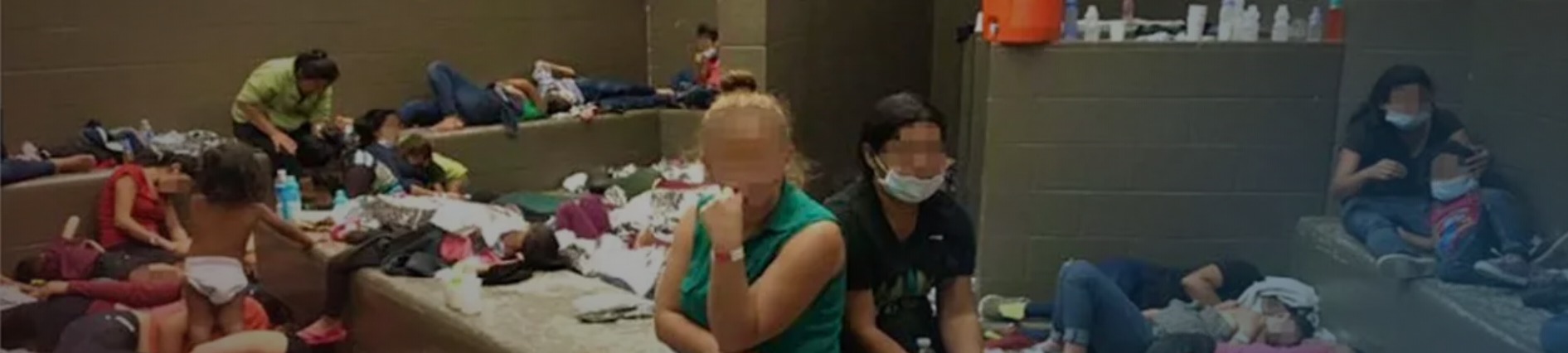
The trauma goes beyond taking children away from parents, which is painful enough. Recent news reports have exposed children, including toddlers, being warehoused in horrific and dangerously unsanitary conditions.
This will not be a minor event in these children’s lives. During the Texas Legislative Session, TexProtects educated lawmakers across the state on the consequences of “adverse childhood experiences” (ACEs) – severe events such as mental illness, violence or substance use within the home, an incarcerated caregiver, or abuse or neglect.
In our ACEs Uncovered report earlier this year (http://bit.ly/acesuncovered), we outlined long-term consequences that can result from such experiences.
Research has shown that left untreated, people who suffered multiple adverse childhood experiences had, in adulthood, higher rates of disease, disabilities, social and mental health problems including suicides and suicide attempts, depression, a high number of sexual partners, sexually transmitted diseases, obesity, smoking, substance abuse, and early death.
Now, we – through our government – are creating more children who, assuming they survive this ordeal, could grow up with such health consequences.
As said, TexProtects will “stay in our lane” on immigration and refugee policy and refrain from suggesting what actions should be taken.
However, we have a moral imperative to rule out what action should not be taken: willfully traumatizing children absolutely cannot be an option.
Even if the policy produced the president’s desired result of fewer border crossings (it has not, as detentions and migrant deaths have surged again), hurting children would still be unacceptable.
Americans are outraged when parents abuse or neglect children. We must be equally outraged when our government does the same.
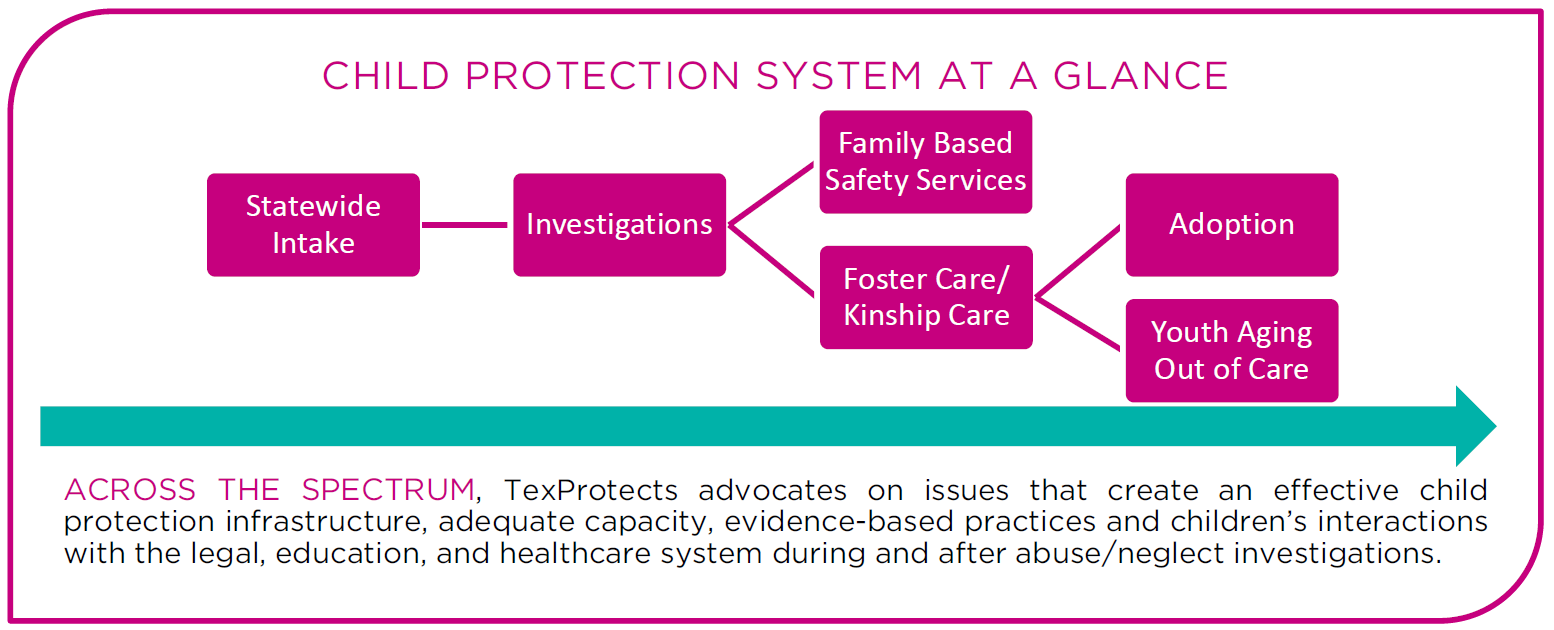
In 2018, there were 280,874 reports of suspected child abuse/neglect to Statewide Intake. 66,370 or 24% of those reports were confirmed.
Child maltreatment will cost Texas an estimated $1.75 billion in CPS expenditures in FY 2019 and over $55 billion in total costs across the victims’ lifetimes.
43% of children who complete Family Based Safety Services programming with their families are reconfirmed as victims of abuse within 5 years.
Today’s post looks at bills affecting Child Protection Systems, and next we will conclude with Mental Health and Trauma. For a PDF version of this post, click here.
Child Protection Systems Background
In the 85th Texas Legislative Session (2017), Governor Greg Abbott declared child protection to be an emergency item. That session resulted in unprecedented child protective services (CPS) reforms and investments including:
Increases in kinship care through enhanced financial assistance;
Expansion of community-based foster care;
Treatment-based foster family care in most regions;
Salary increases; and
Additional hires that lowered caseloads
While those reforms made real progress for the safety of Texas children, there was significant work left to do in the 86th Legislative Session (2019) and much less political will to do it. However, opportunities for continued investment in best practice and improvements to child safety were plentiful. Opportunities presented to the 86th Legislature included:
Maintenance – In order to maintain the salary increases, caseloads, and investments in community-based care despite a growing child population and increasing number of child abuse reports and victims, lawmakers had to invest additional dollars or risk losing ground on the changes made last session.
Pressure from the federal class action lawsuit – In 2015, Judge Janis Jack proposed significant changes to the CPS system to ensure the constitutional rights and due process of children in the care of the state in response to a class action lawsuit filed on behalf of 12,000 children in long-term foster care. While some of the proposals were overturned by the 5th Circuit Court of Appeals as overreach, the findings have consistently made clear that the state has work to do to ensure the safety, health, and constitutional rights of children in the conservatorship of the state.
Family First Prevention Services Act – This session presented a new opportunity to leverage federal funds made available through the federal Family First Prevention Services Act in two significant ways. First, it makes available new prevention funding to help strengthen families before a crisis by investing in mental health, substance use prevention and treatment, and in-home parenting programs. Second, it requires that federal dollars for children in care be spent on family-like settings and treatment centers that are offering accredited and high-quality care. In order to leverage those dollars most effectively, the Legislature had the opportunity to invest in planning and improved quality that would ready the state for implementation.
Child Protection in the 86th texas legislature
Top-Priority Bills Passed
House Bill 1 – The General Appropriations Act
Champions: Sen. Jane Nelson, Sen. Lois Kolkhorst, Rep. John Zerwas, REp. Sarah DAvis
General Overview – Although we did not see the urgent and comprehensive focus on child welfare this session that we did in the 85th, there was continued attention on child protection issues. Lawmakers viewed their role this session as one of a gatekeeper – ensuring that the large-scale changes of last session continued to move forward and that implementation was monitored closely. Despite a cut in state funds, when federal funds were included, the Department of Family and Protective Services (DFPS) budget grew by 6.1%. In their budget, lawmakers showed continued support for community-based care, increasing the use of kinship care, and the needs of older foster youth.
Area of Budget
2020-21 Base Budget
House Bill 1 FINAL
% Difference
Child Protective Services
$3.7 billion
$3.8 billion
2.2% +
Statewide Intake – At DFPS, statewide intake is the front door for the public to report suspected abuse. Additional investments will improve child safety by minimizing hold times on the statewide intake line. Long wait times can result in dropped calls and increase the risk of abuse going unreported. Investments in this biennium will support salary increases of $6,000, resulting in lower turnover and subsequently, a higher level of experience in the workforce.
Area of Budget
2020-21 Base Budget
Additional Investment & House Bill 1 Final
% Difference
Statewide Intake
$45.9 million
$4.3 million $50.2 million total
8.5% +
Caseloads – The maintenance of manageable caseloads is paramount to ensuring the safety of children who are interacting with the child protection system. Investments for CPS direct delivery staff will help to maintain lower caseloads per worker for most caseworkers.
Area of Budget
2021 Base Budget & Average Daily Caseload
Additional Investment, House Bill 1 Final, & Projected Average Daily Caseload
% Difference
CPS Direct Delivery Staff
$1.4 billion
$148 million $1.6 billion total
9.1%
CPS Investigations
13.6 cases
13.6 billion
CPS Family Based Safety Services
10.2 cases
9.3 cases
CPS Conservatorship
25 cases
23.5 cases
Projected caseloads are included in HB 1 and are estimates from the Legislative Budget Board; DFPS will prepare its own analysis.
Community-Based Care – The Legislature provided funding to continue rolling out Community-Based Care (CBC), formerly named “Foster Care Redesign,” which changes the way the state delivers foster care services. Under CBC, a private contractor (called a “Single Source Continuum Contractor [SSCC]”) is responsible for building and managing foster care capacity and placements for a specific service region in the state. CBC has been rolled out in Region 3B (seven-county area including Tarrant County), Region 2 (30-county area in North and North-central Texas that includes Wichita Falls and Abilene) and Region 8A (Bexar County). Additional investments this session will provide resources to expand into Region 8B (16 counties surrounding Bexar), and Region 1 (41 counties in Panhandle), as well as add case management work to the existing contracts.
2020-21 Base Budget
Additional Investment and House Bill 1 Final
% Difference
Community-Based Care
$434.5 million
$66.9 million $501.4 million total
15.4% +0
Foster Care Provider Payments – Foster care families and other providers are essential to building capacity in the foster care system so it meets the current demand, as well as ensuring positive outcomes for children and youth in conservatorship of the state. The Legislature provided additional investment of $12 million in foster family support, certain residential providers and emergency shelters.
Supervised Independent Living (SIL) and Preparation for Adult Living (PAL) – DFPS provides both SIL and PAL programs to assist older youth in their transition toward a successful and self-sufficient adulthood. Without supportive housing and access to training and resources, youth are more likely to be involved in the criminal justice system, are at higher risk of teen pregnancy, have lower high school graduation rates and are more likely to experience homelessness and unemployment. SIL increases of $1.8 million will support case management services for children with more complex needs and increase the rates paid to providers for services. PAL increases of $1.5 million will support 10 additional specialist positions.
HB 475
Champions – Rep. Donna Howard and SEn. Kirk Watson
HB 475 will ensure that pregnant and parenting foster youth receive basic information about ways to keep their child safe and promote healthy attachment, child development, and maternal health if they cannot or choose not to participate in Project Helping through Intervention and Prevention (HIP). Project HIP makes available evidence-based, in-home parenting programs to pregnant and parenting foster youth; however, it is voluntary and not currently available statewide.
Other Priority Bills Passed
TexProtects Goal – Efficiency and Best Practices in CPS and Foster Care
Senate Bill 195 – Sen. Charles Perry / Rep. Tan Parker
SB 195 requires DFPS to update their case tracking system to allow DFPS to keep statistics regarding alcohol and controlled substances when funds are available. This detailed information will allow the department to better understand the correlations between substance use and child abuse/neglect as well as the impacts of prenatal exposure to alcohol and controlled substances on children.
SB 781 – Sen. Lois Kolkhorst / Rep. Ben Leman
SB 781 will establish regulations for child safety, runaway prevention, quality contracting, and strategic planning for facilities that provide 24-hour care to children such as residential treatment centers and emergency shelters. The strategic plan outlined in the bill will help ensure that state agencies are prepared for the implementation of the federal Family First Prevention Services Act.
TexProtects Goal – Increased Use of Kinship Care
HB 1884 – Rep. Ina Minjarez / Sen. Carol Alvarado
HB 1884 requires that when a child is placed with a relative or other designated caregiver, the caregiver is informed, by the court, of the option to become verified by a licensed child-placing agency and of the permanency care assistance program. This opportunity can make available additional resources to the caregiver and as a result, increase stability for children.
HB 3390 – Rep. Scott Sanford / Sen. Angela Paxton
HB 3390 ensures that adequate steps are taken to identify any potential caregiver for a child before that child is placed in foster care. The bill also expands the definition of a designated caregiver to include a person who had a longstanding and significant relationship with the family of the child and requires that the child and parent both be asked to share any relatives or potential caregivers.
TexProtects Goal – Improved Services to Foster Youth Aging Out of Care
HB 53 – Rep. Ina Minjarez / Sen. Beverly Powell
HB 53 will require DFPS to collaborate with the Office of Consumer Credit Commissioner and the State Securities Board to develop an expanded financial literacy education program for foster youth. Experiential training will include filing taxes, using insurance, identity and credit theft, budgeting and civic engagement.
HB 123 – Rep. James White / Sen. Kirk Watson
HB 123 eases the burden of obtaining personal identification documents for foster children by waiving the fee, exempting the requirement for a parent signature and allowing the use of the DFPS regional office in lieu of a permanent address.
HB 1702 – Rep. Donna Howard / Sen. Kelly Hancock
HB 1702 requires institutions of higher education to make publicly available the contact information for their foster care liaison officer and information regarding support services available to students who were formerly in conservatorship. In addition, the name of any student who was formerly in conservatorship will be provided to the foster care liaison officer by their institution at the beginning of each semester.
TexProtects Goal – Cross-Sector Collaboration and Child Protection Systems
HB 72 – Rep. James White / Sen. Angela Paxton
HB 72 allows adopted children with chronic health conditions to continue to have access to the healthcare they would have had if they had remained in conservatorship if the adoptive parents opt-in. Foster children who transition into adoptive placement often experience gaps in medical care, and these gaps can have serious negative health consequences for children with severe disabilities.
HB 621 – Rep. Victoria Neave / Sen. Judith Zaffirini
HB 621 expands existing statutory protections against employer retaliation for a professional’s good faith reporting of child abuse or neglect by defining “adverse employment action” to mean any action that affected an employee’s compensation, promotion, transfer, work assignment, or performance evaluation, or any other employment action that would dissuade a reasonable employee from making or supporting a report of abuse or neglect.
HB 1709 – Rep. Mary González / Sen. José Menéndez
HB 1709 requires school districts to work closely with DFPS to notify when a surrogate parent has been appointed to a child with disabilities who is in conservatorship. Surrogate parents are appointed by school districts when children with disabilities who are under the managing conservatorship of DFPS do not have an available parent or foster parent who is willing or able to serve as the educational decision maker for the child. When a court-appointed surrogate parent is not properly performing their required duties, the district must consult with DFPS to review the appointment and, if appropriate, find a replacement. This bill expands the definitions of who can serve as a surrogate parent and helps ensure transparency and accountability in the system.
HB 1780 – Rep. Rick Miller / Sen. Lois Kolkhorst
HB 1780 requires the court to consider a parent’s good faith attempt to complete a drug rehab program when deciding whether to grant a 6-month extension before terminating parental rights. In light of the overwhelming majority of neglectful supervision cases that involve substance use and the complexity of treatment and recovery, this bill will give parents a chance to break the cycle of drug addiction and keep families together.
HB 2229 – Rep. Jarvis Johnson / Sen. Kirk Watson
HB 2229 adds specific information to a report the Texas Juvenile Justice Department (TJJD) must submit to the Governor, Lt. Governor, and Legislature every even numbered year regarding foster children in the juvenile justice system. This bill requires the report to break down the number of foster children in TJJD custody by age, sex, race, conduct, and first-time offenders. This data will enable advocates and policymakers to better implement programs and practices that can prevent foster youth from entering the justice system.
HB 2737 – Rep. Gene Wu / Sen. Nathan Johnson
HB 2737 will require the Texas Supreme Court to provide annual guidance to judges who preside over juvenile or child protective services cases to establish greater uniformity across the state in how those cases are handled. The issues addressed could include the placement of children with severe mental health issues; changes in placement; final termination of parental rights; release of children detained in
juvenile detention facilities; certification of juveniles to stand trial as adults; and commitment of children to the Texas Juvenile Justice Department.
HB 3809 – Rep. Craig Goldman / Sen. Kirk Watson
HB 3809 will allow suits for personal injury to be brought up to 30 years after the day the cause of action accrued if the injury arose from conduct involving offenses against children including sexual assault of a child, aggravated sexual assault of a child, continuous sexual abuse of a young child, trafficking a child and causing the child to be involved in certain sex crimes, compelling prostitution of a child, and indecency with a child. Currently, the statute of limitations is 15 years. This bill allows more time for child victims to come to terms with their trauma enough to talk about it and bring a civil lawsuit.
Missed Opportunities for Improving Child Protection Systems
Rate Increases
Children who cannot remain safely at home with their parents are removed by CPS. CPS places children in foster care placements when a suitable kinship option is not available. Foster care services may be provided through placement with foster families or through emergency shelters, residential treatment centers, and other programs. Foster care providers are reimbursed by the state at a daily rate based on the type of care that is required to meet the needs of each child. In Texas, these rates do not fully cover the cost of providing foster care services, and providers must secure philanthropic donations that subsidize the rates in order to provide quality foster care. While lawmakers did make some investments in rate increases, in most cases these increases did not keep pace with inflation and actual purchasing power decreased. Insufficient rates contribute to continuing problems in building sufficient capacity to serve children in need.
Trauma-Informed Care
Children who are interacting with the Child Protection System experience trauma at higher rates than their peers and often in patterns that are complex and chronic. Although DFPS currently includes trauma-informed training in programs made available to DFPS employees as well as foster, adoptive, and kinship caregivers, the comprehensiveness and accessibilty of that training may not be sufficient to ensure staff and caregivers have the skills they need to recognize and address the ways that trauma may be affecting a child’s behavior. Unfortunately, the Legislature failed to take action to ensure that the adults who are charged with decision making on behalf of traumatized children, have adequate training to understand the ways trauma can impact biology and behavior or strategies to increase resilience and healing.
Funding for Increased Quality in Foster Care
The Family First Prevention Services Act, which will go into effect in 2021, targets federal funding to evidencebased foster care prevention services and improved foster care that provides the best environment for each child’s
unique needs. For children with therapeutic needs, Family First dollars are available for providers who have thirdparty assessment, access to medical staff, and follow-up after transition to assure successful placement. Many
Texas providers are not currenly meeting the standards laid out by the bill. This session offered an opportuntiy to
invest in programs and services that are being prioritized by Family First so that implementation will be efficient,
federal dollars can be maximized, and children will have access to higher quality care.